Why does your hair never come back exactly the same after summer?
We all expect summer to leave us with lasting memories. What we rarely consider is that it also leaves its mark on our hair. By the end of the holidays, almost without noticing, your hair no longer looks the same. It has lost its shine, becomes frizzier, and the ends feel more fragile.
The explanation seems obvious.
“The sun damaged my hair.”
But the reality is far more complex.
Summer doesn't expose hair to just one aggressor. Within a few weeks, it subjects the hair fiber to the highest concentration of environmental stressors of the entire year. Ultraviolet (UV) radiation, heat, humidity, salt water and wind all act simultaneously, interacting with one another and amplifying their impact on the hair fiber.
Science has a name for the combined effect of these environmental exposures: the hair exposome.
Understanding how it works helps us understand one essential concept:
Summer doesn't change your hair overnight. It accelerates its biological ageing.
UV Radiation: The Biological Amplifier of the Hair Exposome
When we think about summer hair damage, UV radiation usually takes all the blame, and for good reason.
Sun exposure triggers photo-oxidative processes that progressively alter the proteins, lipids and pigments that make up the hair fiber.
However, one of the most fascinating discoveries in trichology is that UV radiation does much more than cause direct damage.
Hair that has already been exposed to sunlight becomes significantly more vulnerable to other environmental stressors. Water, humidity and chlorine all have a greater impact when they act on a fiber that has already entered a state of oxidative stress.
But what really happens inside the hair fiber during summer?
Although we only notice visible changes such as dullness, dryness or frizz, the biological alterations begin long before these signs appear.
The Hair Fiber Loses Its First Line of Defence
The cuticle is the hair's first protective barrier. Its surface is covered by a thin lipid layer that lubricates the fiber, enhances shine and reduces friction between individual hair fibers.
Throughout the summer, this protective layer gradually deteriorates.
UV radiation promotes lipid oxidation, while salt water and chlorine accelerate lipid loss and progressively disrupt the organisation of the cuticle.
One of the most interesting effects becomes apparent after swimming. Chlorinated water increases friction between individual hair fibers, meaning that hair no longer glides smoothly against itself.
As a result, hair gradually loses softness, becomes more prone to tangling and reflects less light.
Before hair starts breaking, it first loses its ability to protect itself.
Summer Leaves a Mark the Hair Fiber Cannot Erase
There is one fundamental difference between skin and hair.
Skin can regenerate. The hair fiber cannot.
Every hour spent in the sun, every swim in the pool, every time you brush wet hair or rub it with a towel leaves a small structural alteration behind.
Individually, these changes are almost insignificant.
But when they accumulate over weeks, something very different happens.
Science refers to this process as hair weathering: the progressive deterioration of the hair fiber caused by the accumulation of repeated environmental aggressions. And it explains why so many people notice a dramatic change in their hair by the end of summer.
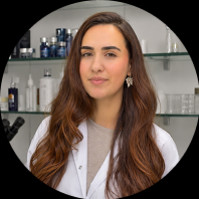
Miriam Quevedo's Secret to Summer Hair Protection
The best strategy against hair fiber photoageing is not repairing damage once it becomes visible, but preserving the integrity of the fiber from the very first day of sun exposure.
For this reason, throughout the summer I recommend incorporating a UV-protective leave-in mist such as SUBLIME GOLD ULTRA BRILLIANT MIST, specifically designed to help protect the hair fiber during sun exposure while preserving shine, softness and overall hair quality.
Hair remembers every summer. The difference lies in how we choose to protect it.
References
This article is based on peer-reviewed scientific literature in trichology, hair science and cosmetic research, with the aim of bringing the biology of hair and scalp closer to readers through accessible, evidence-based communication.
- Cedirian, S., Prudkin, L., Piraccini, B. M., Santamaria, J., Piquero-Casals, J., & Saceda-Corralo, D. (2025). The exposome impact on hair health: etiology, pathogenesis and clinical features ‒ Part I. Anais brasileiros de dermatologia, 100(1), 131–140. https://doi.org/10.1016/j.abd.2024.07.003
- Robbins, C. R. (2012). Chemical and Physical Behavior of Human Hair (5th ed.). Springer.
- Wortmann, F. J., & Popescu, C. (2019). Known and Unknown Features of Hair Cuticle Structure: A Brief Review. Cosmetics, 6(2), 32.