




Sensitive Scalp Shampoo: The Complete Guide to Choosing Right
A sensitive scalp is not a trend or a marketing category. It is a genuine physiological reality that affects millions of people and has, for too long, received incomplete answers: generic gentle formulas, vague advice and solutions that soothe the surface without addressing the underlying cause.
If your scalp itches, reacts easily, dries out or flares up with changes in season, stress or certain products, what you need is not just any mild shampoo. You need to understand what is actually happening in your skin and make an informed choice.
At Miriam Quevedo, we have spent over 15 years defending a principle now broadly supported by science: the scalp is an extension of the face. It deserves the same level of attention, the same high-performance actives and the same depth of care. And your shampoo is the first link in that chain. More on scalp wellness
Why Does the Scalp Become Sensitive?
Scalp sensitivity does not appear out of nowhere. There is always a trigger or a combination of them - that compromises the skin barrier and activates an inflammatory response.
Internal factors:
Hormonal shifts - the menstrual cycle, menopause, pregnancy, chronic stress alter sebum production and the skin's immune response. Stress in particular elevates cortisol levels, which translates directly into higher systemic inflammation that the skin registers immediately.
A diet high in refined sugars and ultra-processed foods can aggravate internal inflammation and disrupt the scalp microbiome - that ecosystem of microorganisms that protects and regulates the scalp's balance.
Underlying dermatological conditions such as seborrheic dermatitis, psoriasis or atopic dermatitis predispose the scalp to greater reactivity against any external aggressor.
External factors:
Environmental pollution, hard water, temperature fluctuations and UV exposure progressively degrade the scalp's lipid barrier. Excessive heat - high-temperature blow-drying, straighteners, curling irons - accelerates that process considerably.
And then there are the products themselves. An inadequate shampoo is, more often than people realise, the most direct and most avoidable cause of scalp irritation.
Itchy and Dry Scalp: Two Signals You Should Not Ignore
Scalp itch and extreme dryness are the most common manifestations of sensitivity and they frequently go hand in hand. Dry skin loses its capacity to retain moisture, its barrier weakens, and the cutaneous nerve endings begin to react to stimuli that a healthy scalp would never even register.
The cycle is straightforward: dryness compromised barrier → irritant penetration → inflammation → itch → scratching → further barrier damage. Breaking that cycle requires acting at the root, not simply soothing the symptom in the moment.
If you recognise these signs in your scalp, you likely already sense that your current shampoo is part of the picture. Let us look at exactly why. Go deeper: itchy scalp causes and treatments
The Long-Term Consequences of Untreated Sensitivity
A sensitive scalp that does not receive appropriate care does not simply cause occasional discomfort. Over time, chronic low-grade inflammation can have deeper consequences for hair health:
Persistent inflammation affects the hair follicle, which requires a balanced environment to produce healthy hair. A chronically irritated scalp can lead to increased shedding, reduced density and slower, weaker growth.
A deteriorated skin barrier makes the scalp more permeable to external agents - fungi, bacteria, allergens, pollution.This increases the risk of developing contact dermatitis, seborrheic dermatitis or a worsening of pre-existing conditions.
The scalp's microcirculation - essential for nourishing the roots is also compromised in inflammatory environments. The follicle receives less oxygen and fewer nutrients, precisely when it needs them most. Discover the benefits of the exfoliation of the scalp
Ingredients That Fight Sensitivity: What to Look For
A good sensitive scalp shampoo is not simply one with "fewer bad ingredients." It must include actives that work proactively to restore the skin's balance.
Calming agents: Complexes based on Xylitol and Lactitol act on irritation both immediately and over the long term, reinforcing the skin barrier and regulating the flaking process. Alpine Edelweiss Flower Extract delivers high-efficacy antioxidant and calming properties. Organic Baobab Oil combines anti-inflammatory, regenerative and conditioning properties for irritated scalp skin.
High-performance hydrators: Hyaluronic Acid at multiple molecular weights acts as a protective membrane against moisture loss, plumping the hair fiber and hydrating in depth. Encapsulated Swiss Glacial Water penetrates to the deepest layers of the skin, increasing cellular resilience and maintaining continuous hydration. Betaine Amino Acid retains up to 40% of water in the skin, reducing irritation and leaving the scalp comfortable.
Gentle cleansers: Surfactants derived from oat amino acids (Sodium Lauroyl Oat Amino Acids) cleanse effectively without compromising the lipid barrier - sulfate-free and highly skin-tolerant. Panthenol provitamin B5 protects, hydrates and softens both hair and scalp. White Caviar Oil delivers amino acids, proteins, essential fatty acids and peptides with unique repairing and anti-aging properties.
Ingredients That Can Trigger Sensitivity: What to Avoid
This may be the most immediately useful part of this guide. Because many sensitive scalps are sensitive, at least in part, because of the products being used to care for them.
Aggressive sulfates (SLS / SLES): Sodium Lauryl Sulfate is the most widely used surfactant in conventional shampoos, prized for its low cost and high foam production. Its problem is that it does not distinguish between dirt and protective lipids - it strips both with equal efficiency. Dermatological research has found that this ingredient can alter the skin barrier, produce irritation, dryness and worsen conditions such as atopic dermatitis in those with sensitive skin. The more it is used, the more the barrier is damaged, and the more reactive the scalp becomes.
Synthetic fragrances: One of the most frequent causes of allergic contact dermatitis on the scalp. They do not always produce an immediate reaction; sensitisation can develop gradually over time with repeated exposure.
Parabens: Broad-spectrum preservatives whose use in people with reactive skin or inflammatory conditions is generally recommended to minimise.
Ethyl alcohol in high concentrations: Highly desiccating, it disrupts the scalp microbiome and aggravates dryness with continued use.
Mineral oils, paraffin and petrolatum: These form an occlusive film that prevents the scalp from breathing properly and can clog follicles over time, compounding sensitivity.
A shampoo free from all of the above is not a luxury or a marketing proposition. It is the foundation of any serious sensitive scalp care routine. Explore the full sensitive scalp range
The Miriam Quevedo Sensitive Scalp Shampoo
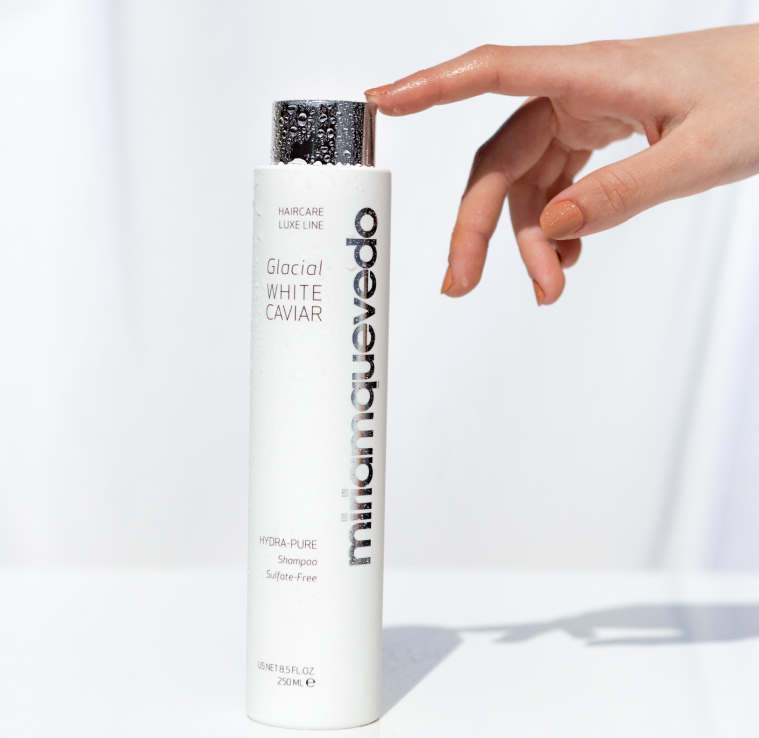
The Glacial White Caviar Hydra-Pure Shampoo was formulated specifically for sensitive, irritated, dehydrated and stressed scalps. Not as a toned-down generic formula, but as a highly concentrated anti-aging treatment with all the actives needed to restore skin balance from the very first wash.
Awarded the Harper's Bazaar Malaysia Beauty Award for Most Nourishing Shampoo and the Allure Russia Best of Beauty Award, this shampoo goes far beyond cleansing:
It rebalances the scalp's microflora, actively relieving irritation and protecting against future damage. The Scalp Hydrating and Calming Complex (Xylitol and Lactitol) combats dryness, flaking and itch with immediate and long-lasting effect. White Caviar Oil creates a unique anti-aging lipo-protein complex with powerful repairing and regenerative properties. Encapsulated Swiss Glacial Water penetrates deeply to increase cellular resilience. Powerful antioxidants protect against oxidative stress and the deterioration of keratin.
Formulated without sulfates, parabens, mineral oils, phthalates, paraffin or petrolatum. Safe for color-treated and keratin-treated hair.
How to use: Apply to wet hair, massage gently onto the scalp and leave for 2 to 5 minutes before rinsing. The formula is highly concentrated; you will need considerably less than you might expect. Discover the Glacial White Caviar Hydra-Pure Shampoo
The Complete Ritual: Beyond the Shampoo
The shampoo is the starting point but sensitive scalp care is significantly more effective when it becomes a full ritual. The Glacial White Caviar collection offers a complete, synergistic sequence designed to work in layers:
Step 1 - Weekly exfoliation (pre-shampoo): The Extreme Caviar Exfoliating Scrub Scalp Mask clears the scalp of dead cells, excess sebum and product residue that block the action of subsequent treatments. Use once a week before shampooing.
Step 2 - Cleanse (every wash): Glacial White Caviar Hydra-Pure Shampoo. Leave for 2 to 5 minutes. This is the core of the ritual.
Step 3 - Treatment and nourishment: The Glacial White Caviar mask or conditioner seals in hydration, reinforces the hair fiber and extends the benefits of the shampoo throughout the week.
On consistency: Scalp changes take time. Meaningful improvement is generally visible after 3 to 4 weeks of continued use—the time the skin barrier needs to genuinely regenerate, not just feel temporarily soothed. View the complete sensitivity ritual
A well-cared-for sensitive scalp does not just stop being uncomfortable - it becomes the best possible foundation for healthier, denser and more resilient hair. The shampoo you choose every time you wash is not a minor decision. It is, week after week, the single most influential choice you make for your scalp's long-term health.