




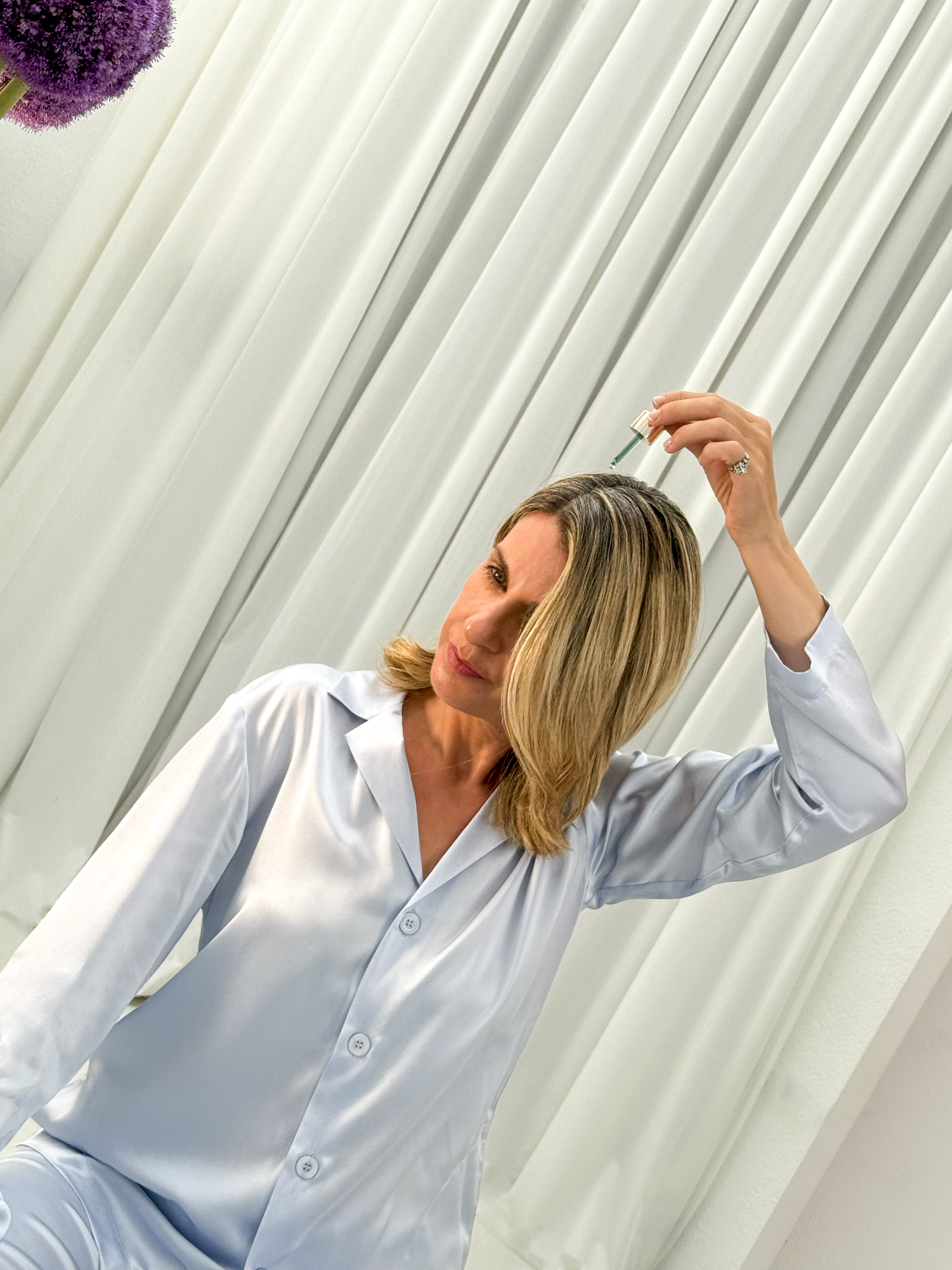
Flaking, persistent itch, redness and a scalp that simply cannot find its balance. If these symptoms feel familiar, you may be dealing with seborrheic dermatitis — one of the most common scalp conditions and, at the same time, one of the most misunderstood.
It is not simply dry skin. It is not a hygiene issue. It is a complex inflammatory response with a name, identifiable causes and real solutions.
At Miriam Quevedo, we have spent over 15 years studying the scalp with the same methodology that dermatological science applies to facial skin. Because the scalp is skin. Living skin, with its own microbiome, its own cutaneous barrier and its own capacity to fall out of balance. This guide explains exactly what happens, how to recognise it and what to do about it.
How to Diagnose Seborrheic Dermatitis
The Disruption Mechanism: What Is Actually Happening in the Skin
Common Causes of Seborrheic Dermatitis
A Preventive Lifestyle
How Seborrheic Dermatitis Treatments Work
What to Avoid to Protect Against Seborrheic Dermatitis
How to Diagnose Seborrheic Dermatitis
Before addressing treatment, it is essential to understand what we are dealing with. Two conditions are frequently confused: dehydration-related flaking and true seborrheic dermatitis. The distinction matters, because the approach is different.
Dehydration-related flaking: the flakes are fine, white and dry, and appear diffusely across the scalp. They are typically linked to very hot water, harsh shampoos or temperature changes. The scalp may feel tight, but there is no notable redness or inflammation.
Seborrheic dermatitis: the scales are greasier, yellowish or whitish in colour, and tend to accumulate in specific zones — particularly along the hairline, behind the ears and at the crown. The scalp appears red and irritated, itching is persistent, and excess sebum is visibly present.
Are seborrheic dermatitis and atopic dermatitis the same thing?
No. Although both cause inflammation and flaking, their mechanisms differ. Atopic dermatitis involves a generalised immune hypersensitivity and is often associated with asthma and allergies. Seborrheic dermatitis is linked to the proliferation of a specific fungus — Malassezia — and to excess sebum production. When in doubt, a dermatologist can confirm the diagnosis with a simple clinical examination.
The Disruption Mechanism: What Is Actually Happening in the Skin
Seborrheic dermatitis is not simply "dry skin". It is the result of three mutually reinforcing factors:
Excess sebum production in areas with the highest density of sebaceous glands.
Proliferation of Malassezia fungus, a microorganism that naturally inhabits the scalp but grows in an uncontrolled manner when sebum is in excess.
Individual immune inflammatory response, which varies from person to person and determines the intensity of symptoms.
When Malassezia metabolises sebum, it produces fatty acids that degrade the scalp's lipid barrier, irritating the stratum corneum. The barrier weakens, external irritants penetrate more easily and the inflammatory response intensifies. The visible result: flaking, redness, scalp itch and, in advanced cases, a burning sensation.
The more one scratches, the more damage is done to that barrier and the more the cycle perpetuates itself. Breaking it requires acting at the root cause, not just at the symptom.
Common Causes of Seborrheic Dermatitis
Personal factors
Genetics: there is a constitutional predisposition that determines baseline sebum production levels and individual sensitivity to Malassezia.
Chronic stress and cortisol spikes: high-performance stress elevates cortisol levels, which in turn stimulates the sebaceous glands and disrupts the cutaneous microbiome. The skin-brain connection is real, measurable and direct.
Hormonal fluctuations: the menstrual cycle, pregnancy, menopause and hormonal treatments alter sebum production and the scalp's immune response, making it more reactive at certain moments.
External aggressors
Urban pollution: suspended particles and heavy metals deposit on the scalp, generating oxidative stress and contributing to the disruption of the cutaneous barrier.
Hard water: excess calcium and magnesium in tap water alters the scalp's pH and promotes microbial imbalance.
Shampoos with aggressive sulfates: formulas containing Sodium Lauryl Sulfate (SLS) strip the scalp's protective sebum indiscriminately. The scalp responds by producing more sebum, creating a "rebound effect" that worsens the condition.
A Preventive Lifestyle
Seborrheic dermatitis has a systemic dimension that cannot be ignored. These are the most effective levers for change:
Anti-inflammatory nutrition
Refined sugars and ultra-processed foods raise insulin levels, which in turn stimulates sebum production. Dairy, in sensitive individuals, can aggravate internal inflammation. A diet rich in omega-3 fatty acids, leafy greens and antioxidants creates the least favourable internal environment for flare-ups.
Emotional wellbeing
The skin-brain connection is not a metaphor: chronic stress directly alters the composition of the cutaneous microbiome and amplifies the inflammatory response. Prioritising restorative sleep — understood as a health tool, not a luxury — is part of the protocol.
Washing technique
Water temperature matters more than it seems. Hot water stimulates the sebaceous glands and strips the protective hydrolipidic film. Always washing with warm water, applying shampoo with a gentle circular scalp massage that activates microcirculation without friction, and rinsing thoroughly are habits that make a genuine difference.
How Seborrheic Dermatitis Treatments Work
An effective approach to seborrheic dermatitis requires acting on three simultaneous levels: detoxifying, cleansing without aggression, and rebalancing the scalp's microbial ecosystem.
Step 1 Exfoliating detox
The scalp accumulates oxidised sebum, dead cells and product residue that clog follicles and create the ideal environment for Malassezia proliferation. Regular pre-wash exfoliation frees the scalp of this toxic load without damaging the barrier.
The Extreme Caviar Exfoliating Scrub Scalp Mask combines 2% encapsulated botanical salicylic acid, caffeine and glucolactone to detoxify deeply, oxygenate the follicle and prepare the scalp so that subsequent actives can penetrate with maximum efficacy. Winner of the Harper's Bazaar Beauty Award 2025 for Best Hair Scrub.
Discover the Extreme Caviar Exfoliating Scrub Scalp Mask
Step 2 Biomimetic cleansing
The shampoo is the central piece of the routine. And in the case of seborrheic dermatitis, choosing the wrong one can perpetuate the problem. A shampoo with aggressive sulfates strips protective sebum, triggers the rebound effect and worsens the condition. The alternative is formulas that cleanse selectively and biomimetically, respecting the scalp's hydrolipidic film.
The Glacial White Caviar Hydra-Pure Shampoo was formulated specifically for sensitive, irritated and reactive scalps. Its surfactants derived from oat amino acids (Sodium Lauroyl Oat Amino Acids) cleanse without compromising the skin barrier. Its Scalp Hydrating and Calming Complex of Xylitol and Lactitol addresses active irritation and reinforces the barrier. Encapsulated Swiss Glacial Water hydrates deeply and regulates the scalp's microflora. Sulfate-free, paraben-free, mineral oil-free.
Discover the Glacial White Caviar Hydra-Pure Shampoo
Step 3 Microbiota rebalancing
The medium-term goal is not just to soothe the symptom but to restore the balance of the scalp's microbial ecosystem: inhibiting Malassezia proliferation while nourishing the beneficial bacteria that maintain homeostasis. Calming actives such as Alpine Edelweiss extract, probiotics and anti-inflammatory peptides work in this direction. Consistency is key: microbiome changes require 4 to 6 weeks of sustained routine to consolidate.
What to Avoid to Protect Against Seborrheic Dermatitis
· Heavy oils applied directly to the scalp. Coconut oil, argan and excess oleic serums feed Malassezia, which metabolises lipids to multiply. Oils have their place on the hair fiber, not on an affected scalp.
· Scratching and excessive friction. Scratching creates micro-lesions in the cutaneous barrier that open the door to secondary infections and perpetuate the inflammatory cycle. When itch is intense, the correct topical treatment is the answer — not scratching.
· Leaving the scalp damp after washing. Prolonged moisture is the most favourable environment for fungal growth. Always drying at medium temperature, without holding the dryer too close to the scalp, is a protective habit.
· Using shampoos with aggressive sulfates or synthetic fragrances, which irritate the barrier and can trigger overlapping contact dermatitis.
· Skipping exfoliation. A scalp with accumulated sebum and dead cells is, quite literally, a breeding ground for Malassezia.
Seborrheic dermatitis is a treatable condition. It does not have to be chronic or inevitable. With the correct diagnosis, the right routine and products designed for this specific purpose, the scalp can recover its balance, its comfort and its protective function.
If you would also like to explore sensitive scalp care further or better understand the origins of scalp itch, we invite you to read our complete guides on shampoo for sensitive scalp and itchy scalp.